When a furnace fails during a cold snap or an AC quits during a heat wave, homeowners need solutions fast. Decisions can happen within minutes, and nearly 9 in 10 homeowners expect a response within 24 hours.1 That’s why the best HVAC marketing ideas and strategies are built around speed, visibility, and trust.
At the same time, not every customer is in panic mode. Many people plan upgrades, compare systems, and research rebates before making a decision. HVAC companies that build marketing around both urgent repairs and planned replacements tend to win more work year-round.
1. Build Promotions Around How People Actually Buy HVAC Services
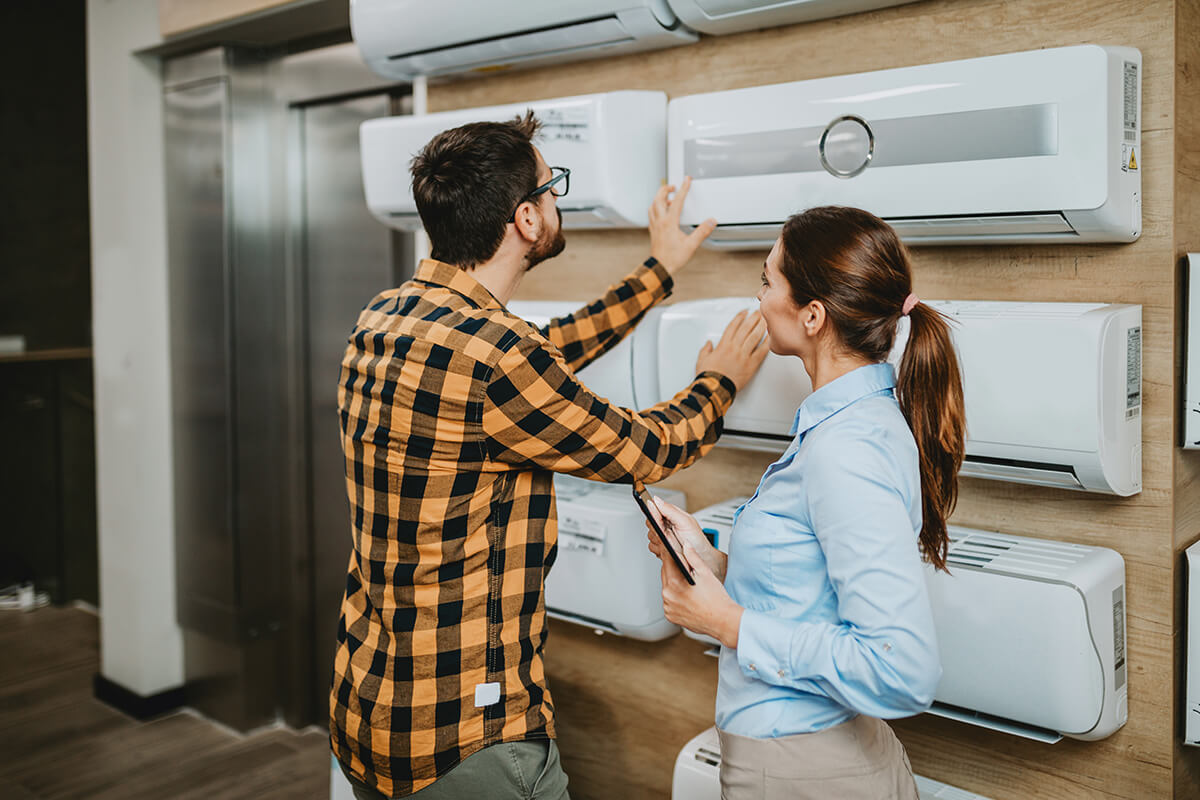
Homeowners generally fall into two groups:
- Emergency buyers who want someone reliable right now
- Planned buyers who want confidence before committing to a major purchase
A strong marketing plan for HVAC company growth needs messaging for both.
Emergency promotions should focus on same-day availability, phone response, and clear service guarantees. Planned upgrade campaigns should focus on energy efficiency, comfort improvements, financing clarity, and equipment options.
2. Make Your Company Easy To Choose In A Hurry
When the buying window is short, people rely on quick trust signals. A major one is your rating. Surveys show 87% of homeowners will not consider a business rated under four stars.1
That means reputation is not a branding task. It is lead generation.
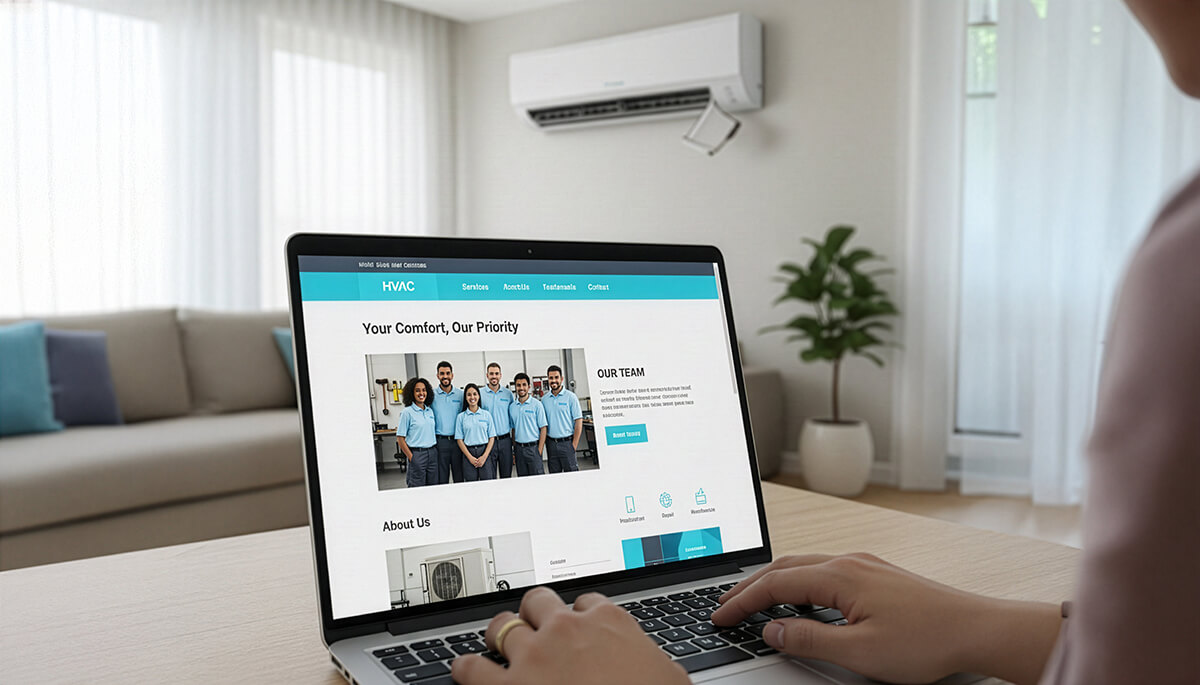
Another major factor is visual credibility. Authentic job site photos, real staff photos, and branded truck images consistently outperform stock imagery because people want proof you are real.
Simple Changes That Raise Conversion Fast
This is one of the most practical sets of HVAC marketing tips you can apply:
- Add real photos of your team, uniforms, trucks, and job sites
- Request reviews automatically after every completed service call
- Put “licensed and insured” near every call-to-action
- Add visible response times (same-day, next-day, 24/7 dispatch)
3. Treat Google Business Profile Like Your Main Lead Source

For many HVAC companies, Google Business Profile generates more leads than the website. Appearing in the map results matters because only 0.44% of searchers click to the second page.2
That makes local map visibility one of the strongest long-term HVAC marketing strategies.
To compete in the map pack, three things matter most:
- Primary category selection
- Review velocity
- Consistent business information across the web
Data shows 61% of top-ranking profiles use “HVAC Contractor” as their primary category. Some businesses also rotate categories seasonally, such as “Heating Contractor” in winter and “Air Conditioning Repair Service” in summer.
Photos also matter. Regular uploads of real project images are directly tied to stronger engagement.
4. Run Ads That Focus On Calls, Not Just Clicks

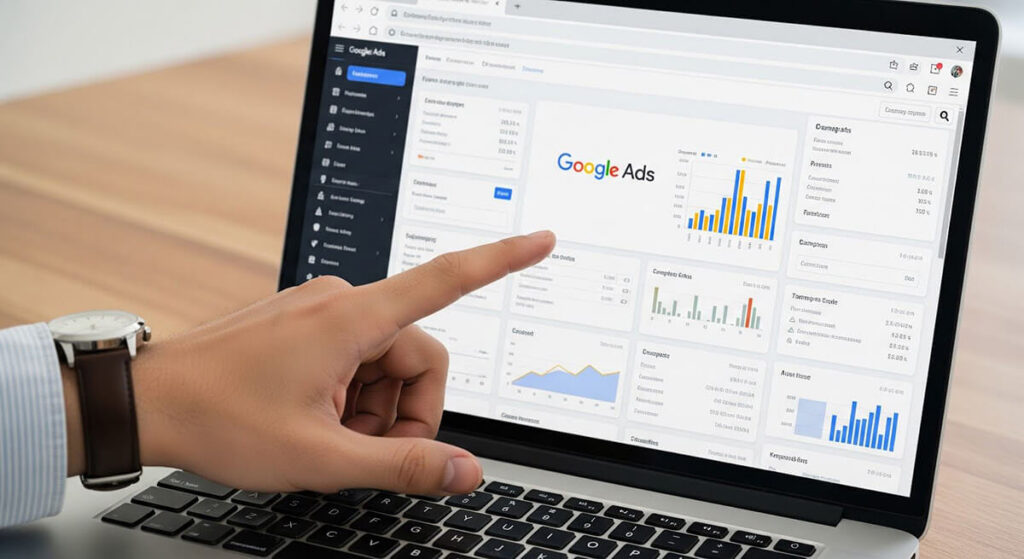
When HVAC demand spikes, paid ads become the fastest way to scale. Google Local Services Ads (LSAs) have become one of the dominant formats for home service businesses because they operate on a pay-per-lead model and include the Google Guaranteed badge.
That badge matters because homeowners are looking for risk reduction.
LSAs also support booking integrations, meaning customers can schedule without even visiting your website.
For many contractors, the best results come from building a campaign around inbound calls, which is why Google Ads for calls has become such a high-performing approach in home services.
Paid search is still valuable for targeting high-intent keywords and running remarketing ads to past site visitors.
5. Build Promotions That Avoid Price Shopping
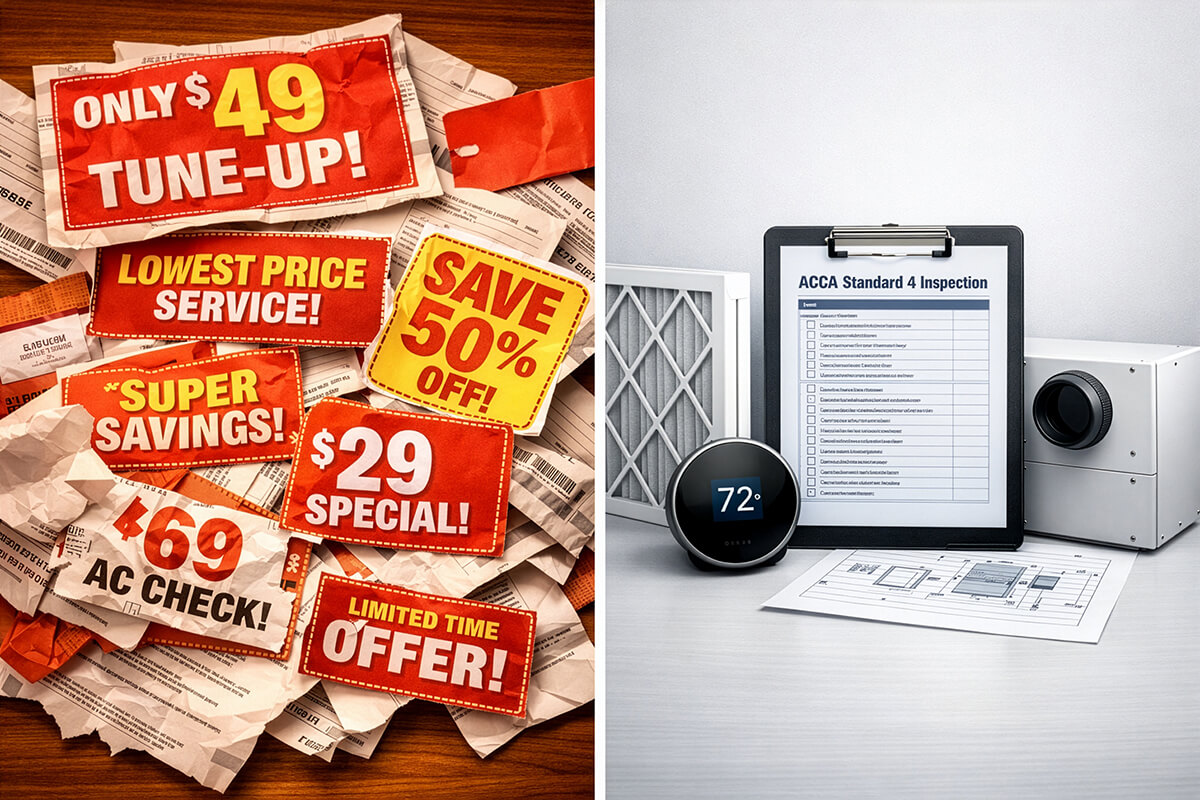
Low-cost tune-ups can bring leads, but they can also trap your business into competing on discounts.
A smarter approach is packaging maintenance and upgrades around recognized industry standards. ACCA Standard 4 outlines a manufacturer-endorsed set of inspection and maintenance tasks for residential HVAC systems. When your promotion is structured around a standard, the offer feels more legitimate and less like a coupon.
Bundled promotions often include:
- Smart thermostats
- High-efficiency filtration
- Energy Recovery Ventilators (ERVs)
In Canada, smart thermostats are also commonly included as part of grant-eligible retrofits, which gives contractors another reason to position them as practical upgrades.This is a strong direction for any air conditioning marketing strategy focused on upsells and better margins.
6. Use Canadian Seasonality To Plan Campaign Timing

Heating remains the dominant energy demand in Canadian homes, with space heating accounting for about 61% of residential energy use.3
Cooling is rising fast, though. Air conditioning penetration increased from 33% in 2000 to 50% in 2020.4 That means summer is no longer a minor seasonal bump. It is becoming a serious revenue period.
The best time to promote maintenance plans and system upgrades is often spring and fall, before systems are stressed.
7. Match The Right Marketing Channel To The Right Offer
Here’s a simple breakdown that works for most HVAC businesses.
| Goal | Best Strategy | Why It Works |
| Emergency repair calls | Google Business Profile + fast dispatch | Buyers decide quickly, often within minutes or hours |
| AC replacement leads | Paid search + remarketing | Targets high-intent shoppers and brings them back |
| Maintenance membership growth | Standard-based tune-up promotions | ACCA Standard 4 creates a clear value framework |
| Upgrade upsells | Smart thermostat + IAQ bundles | Common add-ons tied to comfort and retrofit programs |
8. Follow CASL Rules Before Running Email Or SMS Promotions

Email and SMS marketing can drive high ROI for renewals, referrals, and maintenance memberships. It can also create major compliance problems if handled casually.
In Canada, CASL (Canada’s Anti-Spam Legislation) requires express consent, and implied consent has a time limit. Implied consent from a transaction expires after 24 months, while implied consent from an inquiry expires after 6 months.
Practical CASL Safe Moves
- Use unchecked opt-in boxes on every website form
- Track consent expiry dates inside your CRM
- Keep a clean unsubscribe process on every message
9. Track What Actually Produces Booked Jobs

Modern tracking is less about traffic volume and more about intent.
Google Analytics 4 (GA4) event tracking should focus on:
- Form submissions
- Phone number clicks
- Appointment bookings
If you are serious about scaling digital marketing for HVAC companies, this data matters because it tells you what creates revenue, not just website visits.
This is where SEO for home service companies becomes a real advantage, because it builds long-term lead flow from searches that already show purchase intent.
FAQs
How Fast Should HVAC Companies Respond To New Leads?
Many homeowners expect a response within 24 hours, and urgent situations often get decided within minutes. Fast call answering and booking systems can directly influence who gets the job.
What Should HVAC Companies Post On Google Business Profile?
Weekly updates, promotions, and real job photos can improve profile engagement. Regular review collection is also a major ranking factor.
How Should We Market Heat Pump Rebates In Canada?
Be accurate and careful. The Canada Greener Homes Grant is closed to new applicants. Programs like Oil to Heat Pump Affordability can offer up to $25,000 in some provinces.
How Homevu™ Helps with HVAC Contractor Marketing Strategies
Homevu™ helps HVAC contractors build lead systems that focus on calls, booked appointments, and long-term local visibility. We combine paid lead generation, Google Business Profile optimization, tracking setups, and conversion-focused website strategy so your marketing supports real growth.
If you want expert help building a reliable pipeline using proven HVAC marketing ideas and strategies, you can request a quote here.
References
- “What Homeowners Expect and How HVAC and Plumbing Businesses Can Keep Up.” ACHR News, 16 Dec. 2025, www.achrnews.com/articles/165571-what-homeowners-expect-and-how-hvac-and-plumbing-businesses-can-keep-up.
- ServiceTitan. “Google Business Profile for HVAC: Full Guide With Best Practices.” ServiceTitan, 13 Aug. 2025, www.servicetitan.com/blog/hvac-google-business-profile.
- Division, Natural Resources Canada-Office of Energy Efficiency-Demand Policy and Analysis. “Energy Use in Canada: Trends Publications.” Natural Resources Canada, 21 May 2024, oee.nrcan.gc.ca/publications/statistics/trends/2020/residential.cfm.
Energy Efficiency Trends in Canada, 1990 to 2009. oee.rncan.gc.ca/publications/statistics/trends11/chapter3.cfm?attr=0.
You May Also Like