
Construction marketing in Canada is entering a more disciplined phase. Growth is steadier, competition is sharper, and homeowners are more cautious with large renovation decisions. In the past years, residential renovation spending reached roughly $103 billion, compared with $86 billion for new housing.1 Affordability pressures and an aging housing stock continue to push homeowners toward improving rather than moving. Those realities shape how construction marketing ideas need to work in 2026.
The ideas below focus on visibility, trust, and relevance. Each one reflects how Canadians research, compare, and choose contractors today.
1. Align Your Services With Renovation Demand And Region

2. Make Trust Signals Impossible To Miss
Canadians approach contractors cautiously. Research shows that 7 in 10 Canadians struggle to find a contractor they trust, particularly for renovation projects over $5,000. At the same time, many homeowners do not actively ask for credentials during early conversations.
Licences, insurance details, and professional affiliations should appear early on high-traffic pages. When those details are visible without searching, friction drops and enquiries feel safer.
3. Treat Your Google Business Profile Like A Digital Storefront

Local search visibility remains a primary driver of leads. Removing or hiding a business address on a Google Business Profile can significantly reduce visibility in the Local 3 Pack, even for service-area businesses.
Profiles should stay consistent, complete, and updated with real project photos and activity posts. That stability supports local rankings and reinforces legitimacy.
4. Use Local Services Ads Where Screening Matters
Google Local Services Ads places screened businesses at the top of local results and operates on a pay-per-lead model. The screening process includes licence and insurance verification, which adds an extra layer of credibility for homeowners comparing options.
This channel performs best when calls are answered quickly, and follow-up is tracked. Without that structure, paid leads turn into missed opportunities.
5. Remove Mobile Barriers Before Scaling Spend

Mobile search behaviour directly affects lead volume. About 78% of local mobile searches result in a purchase or service enquiry within 24 hours.2 Slow pages, unclear buttons, or long forms cut into that narrow window.
Before increasing ad spend, mobile usability should be tested thoroughly. Small improvements often outperform larger budget increases.
6. Build Instant Website Credibility
Website design shapes trust quickly. About 75% of users judge a company’s credibility based on website design alone.3 Layout clarity, current content, and straightforward language matter more than visual effects.
Credibility Elements And Where They Belong
| Credibility Element | Best Placement | Primary Benefit |
| Project Photos | Service pages and gallery | Shows real outcomes |
| Licence and Insurance Details | About and quote pages | Reduces perceived risk |
| Review Responses | Homepage and testimonials | Demonstrates accountability |
Clear expectations on the quote page also matter. A brief explanation of what happens after submission and typical response times helps set the tone.
7. Use Construction Content Marketing To Educate
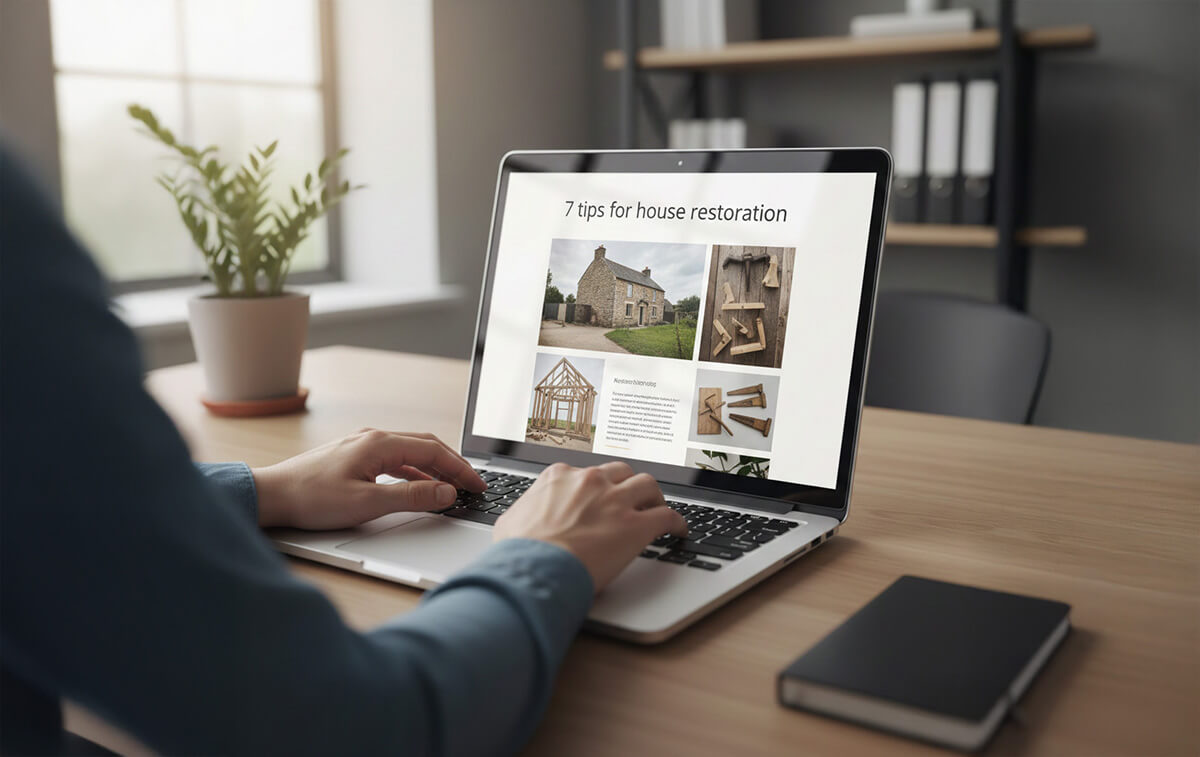
High-ticket services benefit from education more than promotion. Educational content builds trust and long-term loyalty more effectively than sales-driven messaging in complex services.Construction content marketing should answer the questions homeowners ask during estimates. Permits, timelines, material choices, and scope boundaries deserve clear explanations. This approach also supports visibility in systems shaped by AI search optimization, where direct answers surface more often.
8. Manage Reviews As An Ongoing Process
Online reviews strongly influence decisions. About 86% of Canadians read reviews for local businesses, and 57% will only contact companies with at least a four-star rating.4 Many read around ten reviews before reaching out.
A sustainable review process includes:
- Asking after a clear project milestone
- Sending one direct review link
- Responding to feedback with specifics
- Addressing concerns publicly and calmly
Consistency matters more than volume.
9. Combine Referrals With Compliant Follow-Ups
Word-of-mouth remains highly influential. 88% of consumers trust recommendations from people they know more than advertising.5
Referrals work best when paired with light follow-ups. Email communication must comply with Canada’s anti-spam legislation, which requires consent, clear identification, and an easy unsubscribe option. Short, occasional updates keep your name familiar without pressure.
A simple approach includes:
- Asking for referrals during project closeout
- Sending periodic updates to opted-in clients
- Following up post-completion to catch issues early
10. Use Social Platforms For Proof And Responsiveness
Social platforms function as validation tools rather than pure promotion channels. Instagram, Facebook, and neighbourhood-based platforms are widely used to share projects and vet local contractors. In practice, social media for contractors tends to work best when activity stays consistent and relevant rather than frequent.
FAQs
What Should A Construction Marketing Strategy Focus On In 2026?
Local visibility, verified credibility, and clear communication. Renovation demand remains strong, but competition requires sharper positioning and trust signals.
What Helps Most When Marketing A Construction Business Locally?
Consistency across Google profiles, reviews, and website content. When those align, conversion rates improve naturally.
What Marketing Ideas For Home Builders Matter Most Right Now?
Storage, energy efficiency, and realistic cost explanations. Canadian homebuyer research shows strong interest in efficiency, paired with hesitation around higher upfront investment.
How Homevu™ Can Help
Homevu™ works with construction and home service businesses to improve local visibility, credibility, and lead quality. The focus stays on practical execution, compliance, and conversion. To see how this applies to your business, request a quote today.
References
- Norman, Peter. “Canada’s Shifting Fundamentals Are Reshaping Housing and Construction.” Altus Group, www.altusgroup.com/insights/canadas-shifting-fundamentals-are-reshaping-housing-and-construction.
- Sterling, Greg. “Study: 78 Percent of Local-Mobile Searches Result in Offline Purchases.” Search Engine Land, 27 Aug. 2021, searchengineland.com/study-78-percent-local-mobile-searches-result-offline-purchases-188660.
- Selejan, O., et al. Credibility Judgments in Web Page Design – a Brief Review. 1 June 2016, pmc.ncbi.nlm.nih.gov/articles/PMC4863498.
- Paget, Sammy. “Local Consumer Review Survey 2025.” BrightLocal, 14 Nov. 2025, www.brightlocal.com/research/local-consumer-review-survey.
Quinn, William, and William Quinn. “Beyond Martech: Building Trust With Consumers and Engaging Where Sentiment Is High.” Nielsen, 21 July 2022, www.nielsen.com/insights/2021/beyond-martech-building-trust-with-consumers-and-engaging-where-sentiment-is-high.
You May Also Like